
Article: What Is Zardozi Embroidery? A Complete Guide to India's Royal Hand Embroidery
What Is Zardozi Embroidery? A Complete Guide to India's Royal Hand Embroidery
Zardozi embroidery is one of the world's most luxurious and intricate forms of hand embroidery. Recognized for its rich metallic threads, elaborate craftsmanship, and royal heritage, Zardozi has adorned the garments of emperors, queens, and nobility for centuries. Today, this timeless art continues to flourish in luxury fashion, couture accessories, bridal wear, and handcrafted handbags.
Whether you are a fashion enthusiast, collector of artisan-made accessories, or simply curious about this remarkable craft, this complete guide explores everything you need to know about Zardozi art - its history, techniques, materials, craftsmanship, and why authentic handmade Zardozi remains a symbol of luxury.
What Is Zardozi Embroidery?
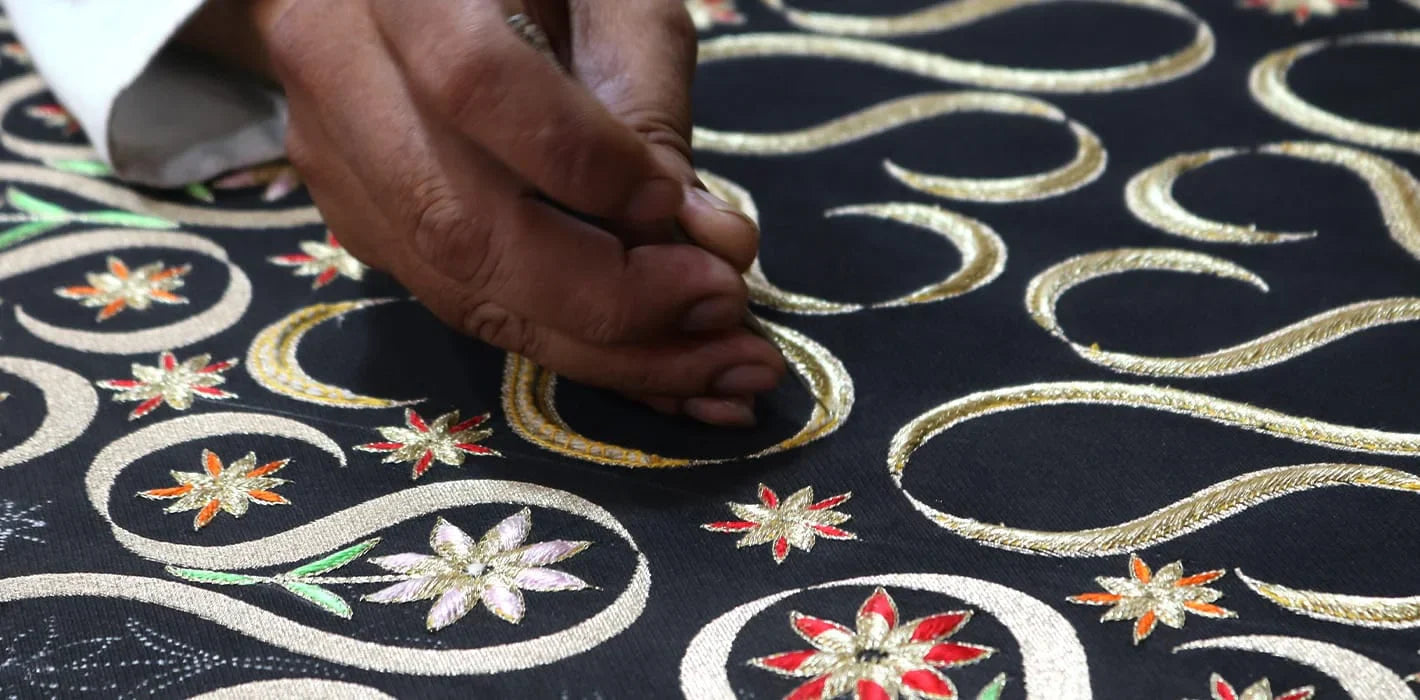
Zardozi embroidery is a traditional hand embroidery technique that uses metallic threads, coils, beads, sequins, pearls, and precious or semi-precious embellishments to create raised, highly decorative patterns on fabric.
The word "Zardozi" comes from the Persian language:
- Zar means gold
- Dozi means embroidery
Together, the term translates to "gold embroidery."
Historically, artisans used genuine gold and silver threads to embellish royal garments, ceremonial robes, wall hangings, horse saddles, and palace furnishings. While modern Zardozi often uses high-quality metallic wires and decorative materials, the essence of the craft remains unchanged—every design is meticulously embroidered by skilled artisans entirely by hand.
The Royal History of Zardozi Embroidery
The origins of Zardozi date back thousands of years to ancient Persia. The craft reached India during the Mughal era, where emperors such as Akbar became great patrons of the art.
Royal workshops employed master craftsmen to create breathtaking embroidered garments for emperors, queens, nobles, and court officials. These luxurious creations symbolized prestige, wealth, and artistic excellence.
Cities like Lucknow, Delhi, Agra, Hyderabad, and Bareilly became renowned centers for Zardozi craftsmanship. Among them, Lucknow emerged as one of the most celebrated destinations for authentic handcrafted Zardozi.
Today, these traditions continue to be preserved by artisan families who pass their knowledge from one generation to the next.
How Is Zardozi Embroidery Made?
Authentic Zardozi is entirely handmade.

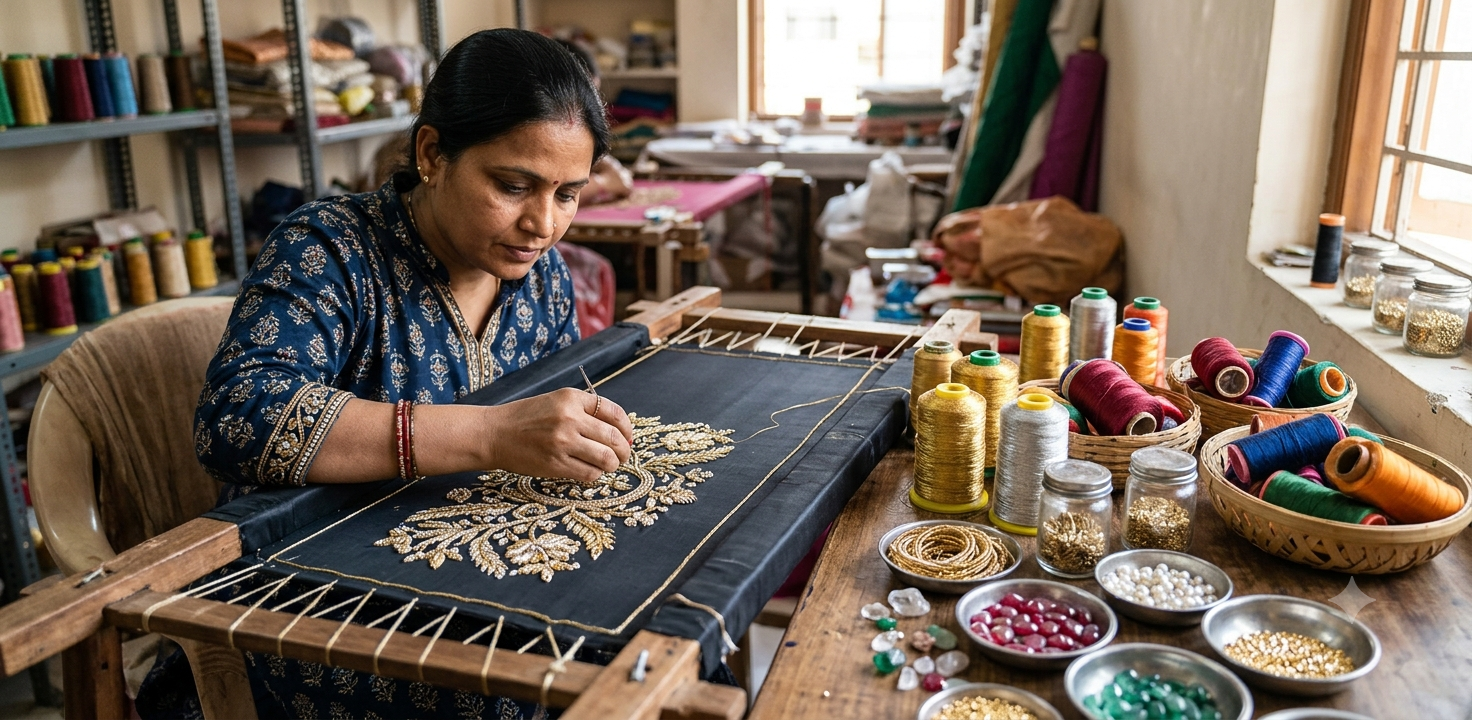
The process begins with an artist sketching the design onto fabric, which is then stretched tightly over a traditional wooden embroidery frame called an adda. Skilled artisans use specialized needles and hooks to attach metallic wires, beads, sequins, pearls, and decorative elements one by one.
Each motif is built layer upon layer to create a distinctive three-dimensional appearance that machine embroidery cannot replicate.
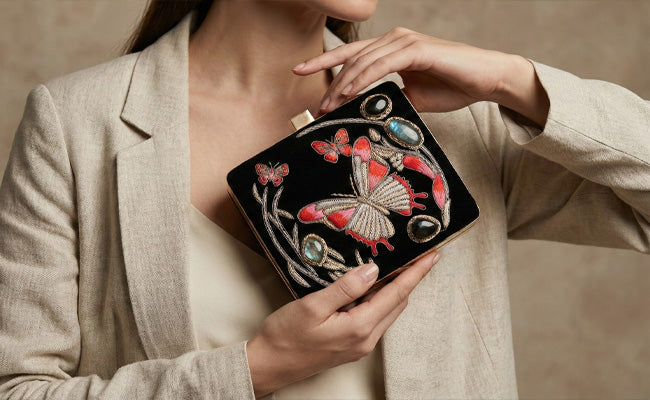
Depending on the complexity of the design, a single handcrafted luxury clutch or handbag may require anywhere from 30 to over 200 hours of meticulous work.
Materials Used in Zardozi Embroidery
Authentic Zardozi incorporates a variety of decorative materials, including:
- Metallic gold and silver threads
- Dabka (coiled metallic wire)
- Nakshi wire
- Salma coils
- Sitara (metal sequins)
- Glass beads
- Pearls
- Crystal embellishments
- Semi-precious gemstones
- Silk threads
- Velvet, silk, satin, and premium fabrics
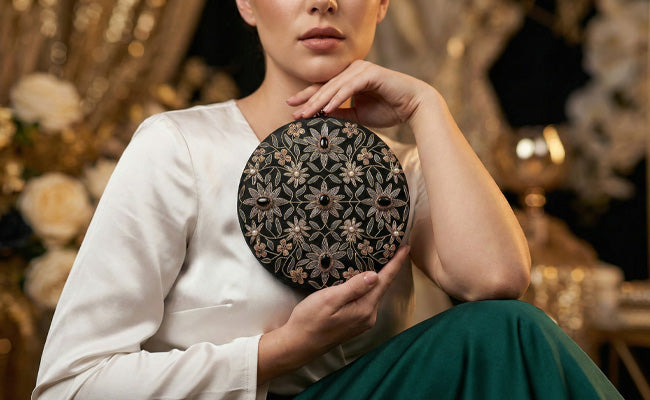
Luxury brands often combine these traditional materials with natural gemstones such as Black Onyx, Labradorite, Tiger Eye, Garnet, Rose Quartz, and freshwater pearls to create heirloom-quality accessories.
What Makes Handmade Zardozi Unique?
Unlike machine embroidery, handmade Zardozi reflects the individual craftsmanship of each artisan.
Every stitch is placed by hand, allowing for:
- Rich texture
- Dimensional embroidery
- Intricate detailing
- Superior durability
- Artistic uniqueness
No two handcrafted Zardozi pieces are ever exactly alike, making each creation a wearable work of art.
Where Is Zardozi Used Today?
Although traditionally associated with royal clothing, Zardozi has evolved into a versatile luxury craft found across fashion and interior décor.
Today it is commonly featured in:
- Luxury handbags
- Designer clutches
- Bridal accessories
- Wedding lehengas
- Couture gowns
- Jackets
- Sherwanis
- Evening bags
- Decorative cushions
- Wall art
- Home décor accents
Its timeless elegance makes it especially popular for weddings, gala events, festive celebrations, and formal occasions.
Why Is Authentic Zardozi Expensive?
Many people wonder why handcrafted Zardozi products command premium prices.
The answer lies in the craftsmanship.
Authentic Zardozi requires:
- Highly skilled artisans
- Weeks of manual work
- Premium-quality materials
- Exceptional attention to detail
- Traditional techniques passed down through generations
When purchasing genuine handmade Zardozi, you're investing not only in a luxury accessory but also in preserving a centuries-old artistic heritage.
Handmade vs Machine-Made Embroidery
| Handmade Zardozi | Machine Embroidery |
|---|---|
| Crafted entirely by artisans | Produced by automated machines |
| Every piece is unique | Uniform designs |
| Rich, raised texture | Flat appearance |
| Superior artistic detailing | Limited depth |
| Heritage craftsmanship | Mass production |
| Luxury collectible | Commercial product |
If authenticity and craftsmanship matter, handmade Zardozi remains unmatched.
How to Identify Authentic Zardozi Embroidery
When shopping for handcrafted Zardozi, look for these signs:
- Slight natural variations that indicate handmade work
- Raised three-dimensional embroidery
- Dense, detailed craftsmanship
- Securely attached embellishments
- High-quality fabrics
- Fine finishing on the reverse side
- Transparent information about the artisans or craftsmanship
Avoid products that appear overly uniform, excessively lightweight, or identical in every detail, as these are often machine-made.
Why Zardozi Is Sustainable Luxury
In today's era of fast fashion, handcrafted Zardozi represents a more thoughtful approach to luxury.
Each piece supports:
- Traditional artisan communities
- Slow fashion
- Skilled craftsmanship
- Small-scale production
- Long-lasting heirloom-quality products
Choosing handmade Zardozi helps preserve one of India's most treasured textile arts while encouraging ethical craftsmanship.
Experience the Art of Handcrafted Luxury
At Zardouzee, we celebrate this centuries-old tradition by transforming authentic Zardozi embroidery into luxury handbags, bridal clutches, evening clutches, and statement accessories. Each creation is meticulously handcrafted by skilled artisans using traditional embroidery techniques, premium materials, and carefully selected embellishments to create timeless designs that blend heritage with contemporary elegance.
Whether you're attending a wedding, formal event, or special celebration, a handcrafted Zardozi accessory is more than a fashion statement - it's a piece of living heritage.
Frequently Asked Questions
Is Zardozi embroidery handmade?
Yes. Authentic Zardozi embroidery is entirely handcrafted by skilled artisans using traditional techniques that have been practiced for generations.
Why is Zardozi embroidery expensive?
Its value comes from the extensive handwork, specialized skills, premium materials, and the time required to complete each design.
What fabrics are used for Zardozi?
Velvet, silk, satin, raw silk, organza, brocade, linen, and other premium fabrics are commonly used depending on the design.
Is Zardozi embroidery durable?
With proper care and storage, handcrafted Zardozi can last for decades, making it suitable for heirloom-quality garments and accessories.
Can Zardozi be washed?
Most handcrafted Zardozi items should be dry-cleaned only. Proper storage away from moisture and direct sunlight helps preserve metallic threads and embellishments.
Zardozi embroidery is far more than decorative needlework. It is a centuries-old artistic tradition that reflects India's rich cultural heritage, extraordinary craftsmanship, and enduring appreciation for luxury.
Every handcrafted piece tells a story; of skilled artisans, meticulous craftsmanship, and timeless elegance. Whether worn as couture fashion or carried as a handcrafted luxury clutch, authentic Zardozi remains one of the finest expressions of wearable art.